Fine Art
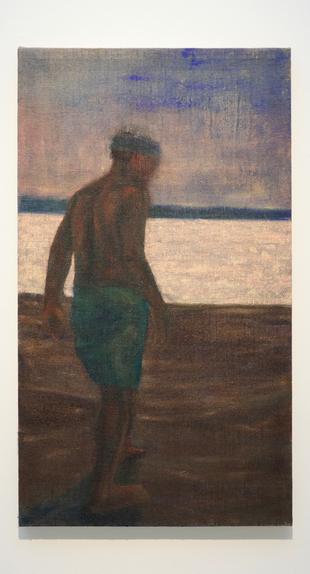
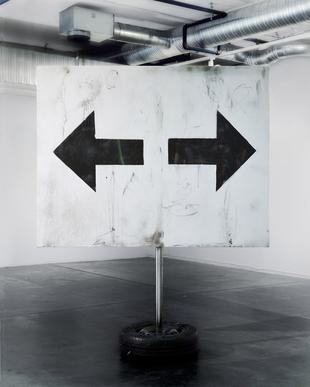
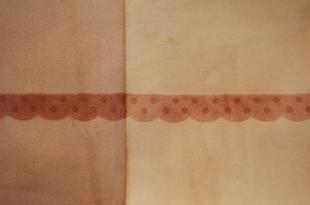
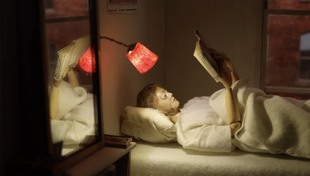
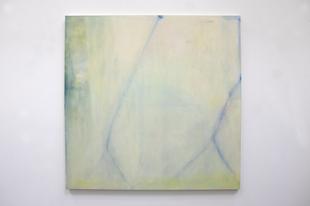
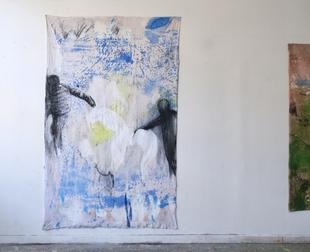
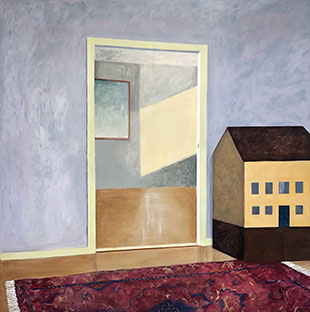
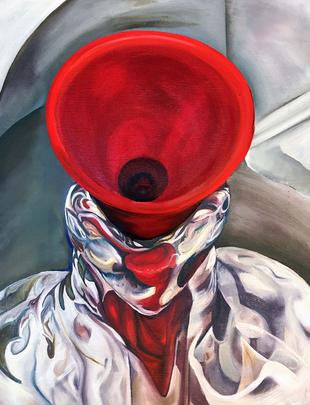
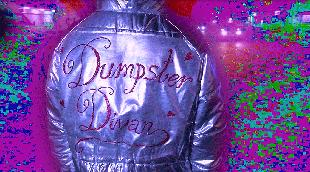
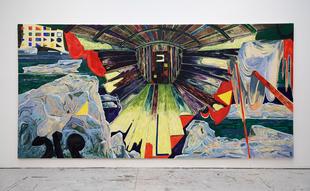
This exhibition brings together fourteen students at the end of their three years of study at Konstfack. Yet an end is never just an end. It is a passage, a shift, a movement from one space to another – from the defined period of education to a practice that is already at work in the world, in contemporary times, in its conflicts and negotiations.
Working with art today is working with seeing. And seeing is never innocent. It is always already formed – by history, power and violence, but also by language and desire. Our gazes bear colonial structures, whiteness norms, heteronormative orders and other screens through which the world appears. The question is therefore not how we can manage to see without power, but rather: What can we do with the gaze we have? How can a counter-gaze arise? What can an oppositional seeing open, disrupt, enable? During the educational programme, the artistic work has been in focus, but never in isolation.
The students have moved between disciplines, between contexts, between different forms of publicness. In collaborations, in site-specific work, in meetings with institutions and external actors, the works have been tested against what resists: spaces, materials, techniques, economies, bureaucracies, bodies, other people. This limitation has not been an obstacle but rather a productive force. Something that compels decision, precision, responsibility. Something that exposes both knowledge and ignorance.
It is also in this relationship that knowledge arises. Not in the isolated body, not in the solitary genius, but between people, materials, technologies, institutions. In what occurs in the spaces between.
Many of the degree projects revolve around the experience of living in a time of unrest. A time that is often described in terms of an end: the end of democracy, the end of capitalism, the end of the idea of an infinitely habitable planet. But the crisis is not only material; it is also narrative. It is about the collapse of the stories. How do you tell a story when the future no longer appears as a continuation of the present? What forms can storytelling take when we are facing a tipping point?And the story – who is it for, and who is left out?
Battles simultaneously rage on representation, on visibility, on which bodies are allowed to take up space in the public and on what terms. Questions of participation, democracy and responsibility run through these works. The students participate, whether they want to or not, in the negotiations on which stories will get to take shape and which subjects will be allowed to stand out as speaking, acting, grieving, entreating.
This is a generation of artists who are not seeking simple answers and who distrust the binary language’s promises of clarity. Instead, they move toward the cracks, the spaces, the as-yet undefined places. They try to formulate critical statements that do not simplify their time but rather stop in it, feel it, think in it – in its contradictions, its violence, its possibilities.
Konstfack’s Degree Exhibition 2026 exhibits fourteen practitioners. Fourteen ways of working, thinking, doing. Diverging in expression, material and method, but united in a desire to understand the world they are already a part of – and to intervene in it.
It is here their work begins. Not after this, but here.
Lina Selander
Professor of Fine Art with a Specialisation in Narrativity and Installation