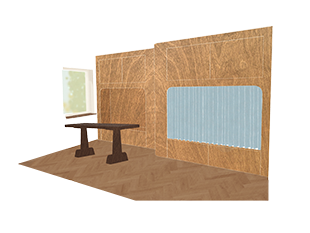
Through four scenarios, this project explores how fixed interior can support changing needs, enabling the home to evolve with its occupants. Working with the existing structure, it shifts focus from adding space to using it better, revealing the potential of a more compact way of living. The 1,5 room 41 sq.m. apartment is a recurring… Continue reading Johanna Fosselius
Author: Ad2026MiN
Isolde Berg
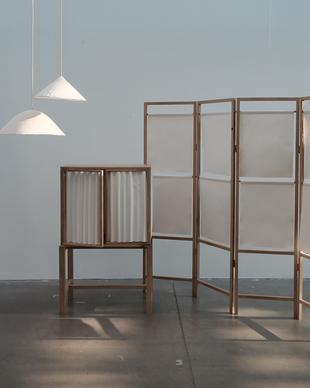
Handmade paper carries both a long craft tradition and the potential for new spatial applications. This work explores how paper can move beyond the flat sheet and be formed into structure, volume, and form. Through experiments with wet pulp, different shaping techniques were tested to understand how the material behaves when dried in molded and… Continue reading Isolde Berg
Isabella Werner
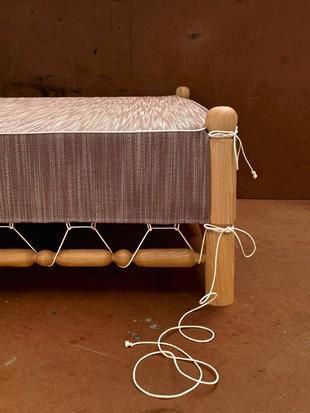
My work engages with sustainability, use, and aesthetics, and explores how furniture can be varied and can endure over time — with the help of string. String-bound textiles allow objects to change and be maintained. When a surface wears out, it can be replaced without losing the object as a whole. Within the string system,… Continue reading Isabella Werner
Frida Littorin
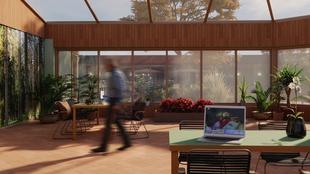
How will future dementia care homes look in the year 2080? As life expectancy increases, the number of people living with dementia is expected to rise significantly in the coming decades, placing pressure on already strained dementia care systems. Today, many dementia care homes are designed to minimise sensory stimuli to reduce stress and anxiety… Continue reading Frida Littorin
Emma Stocklassa
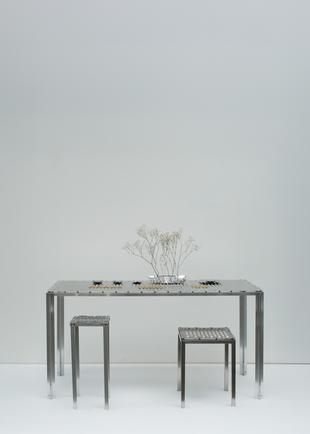
What is function? Is it fixed, or something we construct through context and perception? This degree project questions the balance between practicality and aesthetics, and when an object is understood as functional. A table is used to explore how semi-functionality exists on a thin threshold, by relying on other objects. Here, design is not just… Continue reading Emma Stocklassa
Ellen Jakobsson
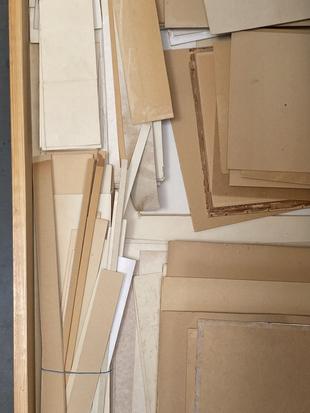
The project approaches craft as a network of relationships, in which the hand, materials and tools interact and are regarded as equal participants. With a focus on material agency and situated knowledge, it explores how the hand’s habitual movement patterns are translated into new materials and contexts.
David Ivarsson
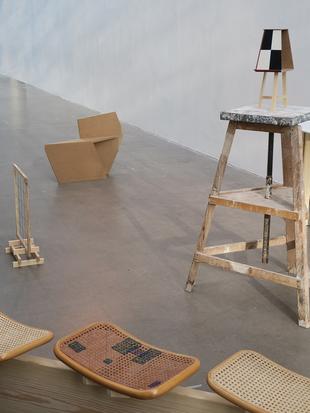
The project examines the gap between the built and the perceived, where reality is no longer fixed but continuously shaped through each glance and every step. In a contemporary context where spaces and objects increasingly reach us, and are consumed as images, surfaces or representations, our understanding of the three-dimensional begins to shift. Drawing on… Continue reading David Ivarsson
Carl Martinsson
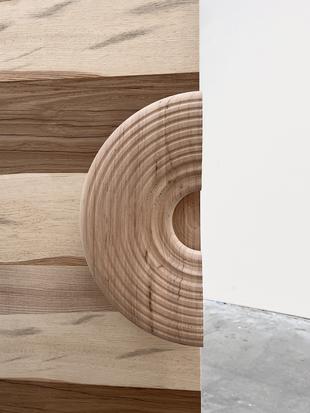
Historically, the place where people died has been the same place where they lived. In the best case, a place of care and love. But over the past hundred years, that has changed. Nowadays, most people’s dying moments take place in a hospital or a nursing home. This also means that the place where we… Continue reading Carl Martinsson
Axel Gillblad
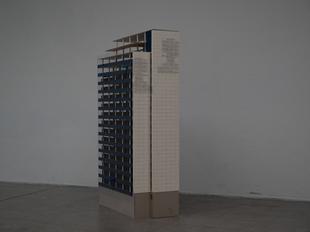
The Hötorget buildings have long been a symbol of Swedish modernist and technological faith in the future of white collar workers, offices and the cityscape. However as the long-awaited technology arrived and progressed, we have begun to realise and be affected by the consequences on several levels; the cityscape, with its endless possibilities of aesthetic… Continue reading Axel Gillblad
Elvira Nordlund

“Tactile Conversations” explores how meeting rooms within social services are designed and how they shape interactions between people. The project is based on a number of meeting rooms in and around the Stockholm area, with a particular focus on environments where children and young people meet social workers. By analysing the function, design and atmosphere… Continue reading Elvira Nordlund