Vice-Chancellor’s Words
In the well-known connect the dots game, the rules appear simple: the dots are already there, numbered and waiting, promising a recognizable image if we connect them in the proper order. But the real potential of the game emerges when we pause, question the sequence, and begin to draw lines differently. The same dots can create entirely new shapes, meanings, and futures. These are the ideas behind the graphic profile for this year’s Degree Exhibition created by Otis Huss and Einar Zotterman who offer us all the opportunity to connect the dots in new ways.
In a rapidly changing world, this gesture of reconnecting—or intentionally misconnecting—has become essential. Established sequences no longer hold the same certainty, and familiar paths do not always lead where we need to go. In a world shaped by rapid technological change, ecological urgency, and social transformation, the challenge before us is not a lack of dots, but how we choose to see and connect them. How can we create something that takes form in human, cultural, and ethical contexts, and how can we imagine what does not yet exist?
Our students work in the intersection of disciplines, traditions, materials, technologies, and personal experiences. They pause, they look again, and redraw the lines. What happens if distant dots are brought into contact? If craft techniques meet digital processes, if personal narratives intersect with global systems, if function gives way to speculation, or beauty to critique? In these acts of reconnection, new imaginaries begin to surface.
The dot to dot analogy also reminds us that uncertainty holds potential. At first, unconventional connections may look messy or incomplete and the image might resist immediate recognition. Yet art, design, craft, and new ways of learning thrive precisely in this space of not knowing. It is here that students test ideas, invent languages, and articulate positions that respond to the complexities of our time. This year, it has also been a pleasure to see many students finding solutions for helping each other and creating collective experiences.
Their degree projects are a gateway to exploration, where they are expanding possibilities and take part in shaping the future. It demonstrates their ability to work with what is given while daring to reconfigure it. To reconnect dots differently is to claim agency: to say that meaning is not fixed, that systems can be rewired, and that imagination is a form of knowledge.
This exhibition is an invitation to us all: enter, discover, and take part in reconnecting the dots!
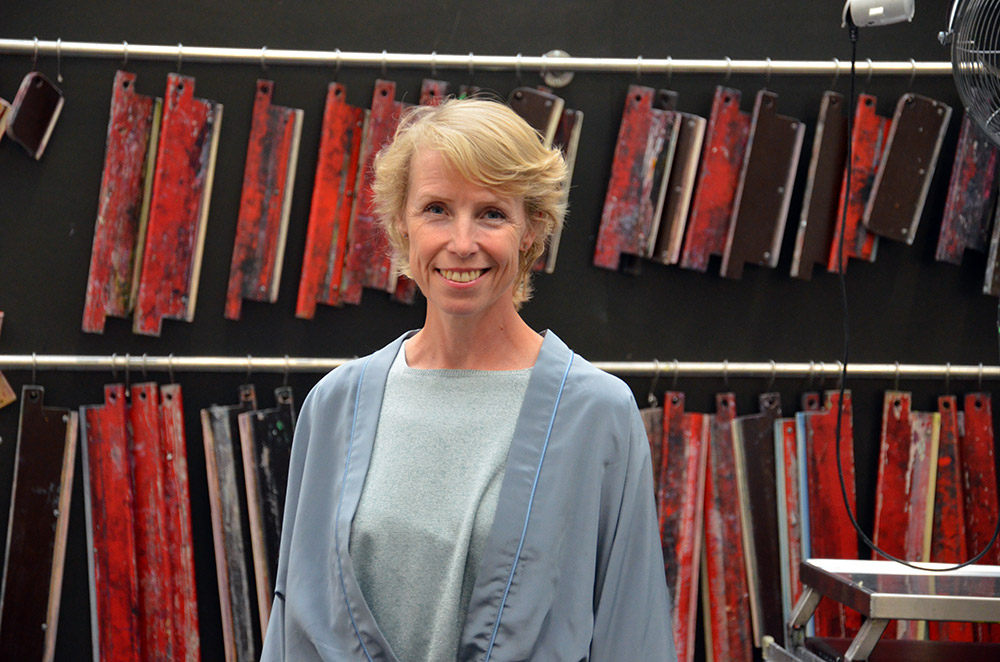
Anna Valtonen, Vice-Chancellor at Konstfack